In a recent journalism assignment I was asked to report on a topic of my choosing and create a short video to tell the story. Well, I love photography. It has put most of my other hobbies on a back shelf. I chose to share about a very special camera, the Ricoh GR 16.2 megapixel digital camera. In this report, I was challenged to share some important details and use “visual storytelling” to enhance what I was verbally communicating to the audience. I was also required to have a broadcast script in AP style. This was difficult as I wanted the narrative to sound natural. I record myself talking about the camera several times, and then wrote the script based on how I talk conversationally with a friend. Sharing the features of the camera and some photos was next, and I did this using my cellphone, still images taken with the camera during B-roll shooting, and then edited the video. Here it is…
Review of the Ricoh GR 16mp camera with examples of street photos and brief description of what makes this camera great.
While it’s an informal review of the camera and 2 minutes isn’t enough time to talk in depth about this amazing camera that came out in 2013, but still takes incredible photos – and the design and lens are based on a camera from the mid 90’s which is in my top 5 best film cameras ever made, the Ricoh GR1. Have questions or comments about the video, camera, or my editing choices? Let me know. You can see my work at https://www.instagram.com/loftvisual/.
A good documentary film tells a very special type of story in a way that no other medium can. They share a fantastic tale, but the best thing about the story is that major elements are based on real-life events. When done correctly, we relate and buy into these stories with a much deeper connection than fictional films. I recently watched a captivating documentary on Netflix called “The Social Dilemma” https://www.netflix.com/title/81254224.
The film has an exciting introduction, and this is important because, without this, I’m not watching for 90 more minutes! There are varying cut scenes, the audio is snippets of interviews alluding to something ominous related to social media, and there is tense background music. These elements set the stage for what is to come, the body of the film is framed by these elements, and this framing carries us through multiple occasions where what is happening in the film is just someone talking in an interview.
During the body of the documentary, there are cut scenes with animation that add narrative that isn’t available in the interviews portion. The interviews also skip around to different people, rather than just having a chronological or linear interview of one person. This helped keep up the pace and kept my attention. The questions and allusions raised by the introduction begin to unfold in the story. Slowly, the documentary spoon-feeds the audience small bites but never gives all the story away at once, the suspense was kept high by this fact and the occasional tense background music.
As I watched the film and reflected on my own efforts to create short films and write stories, I had the firm realization that my stories are told in a manner that is too linear and matter of fact. Nobody likes a story or film, even instructional videos, that just say “Here’s the information”. Think about your last interesting conversation, maybe you met a friend for coffee or chatted with an acquaintance at a social event, did each person just state linear facts? Not likely. A conversation is best if there’s a gradual unfolding of things, a sort of winding road. Straight paths are great to get us somewhere fast, but we are not very entertaining.
After reflecting on my work and comparing it to what I saw in this recent documentary, I realized that mixing things up and getting creative with the production AND the editing can produce a much more exciting work that someone would like to watch. In this short video presentation of what Hanoi looks like at night, I failed to tell a story even though there’s some nice music, introduction animation, and transitions. I’m excited to produce another film soon and do more to draw the audience in.
November 5th, 2021. This post discusses experience analysis in the process of buying a product on Amazon.com’s mobile app.
What are my expectations? What is the source of those expectations?
Amazon Corporation has focused on the customer experience from the beginning when they were primarily an online book reseller. As the internet shopping platform has expanded to sell almost anything and huge advancements have been made on mobile devices, my expectation is that it will be easy to make a purchase and that the process will be very apparent and simple. I also expect to be able to confirm that the product is the correct item by seeing clear product information, related products, and customer reviews of the product. My expectations are based on past experiences with online shopping through Amazon’s desktop site, eBay shopping, and general online shopping purchases in the past. Also, as online shopping has become highly competitive, I feel some degree of entitlement to an easy and smooth shopping experience.
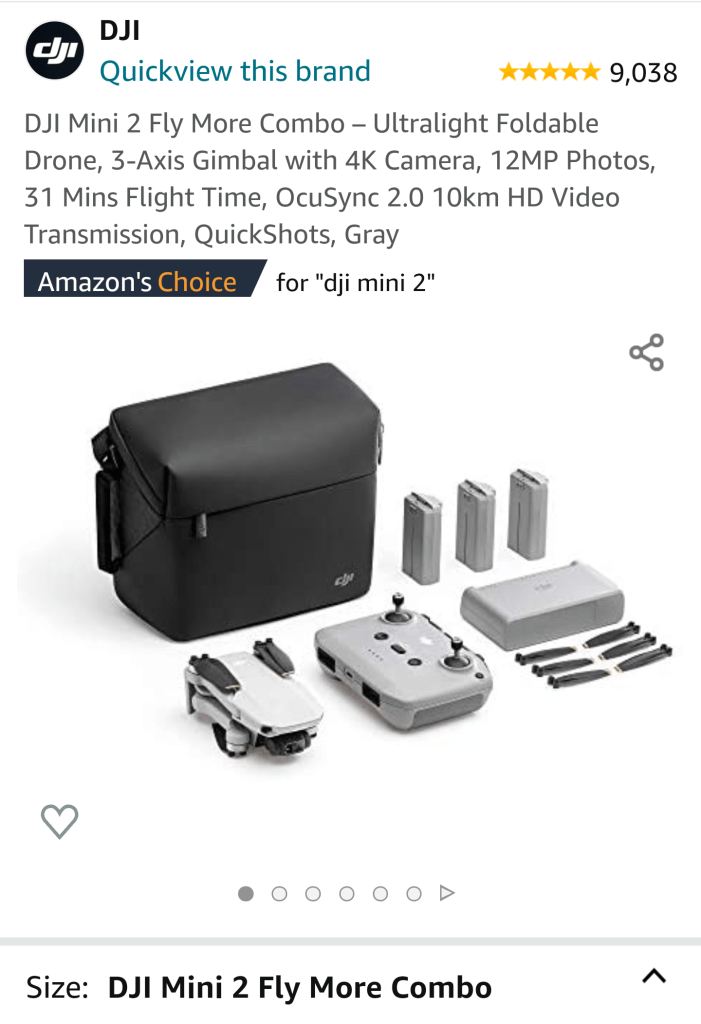
Amason app shopping UI.
What do I notice about the store I’m purchasing the product in? If I’m purchasing online, what is the website trying to say to me? The app/site has a star rating and a banner that endorses this product/vendor. They are trying to assure me that buying through their site is safe and valid by showing a rating in the upper right corner (in this case 5 stars out of 9,038 reviews). As I scroll down, there are two large boxes indicating options for purchase, an upsell offering insurance, the price, and “FREE Returns” further insuring me that a purchase is safe, and a financing offer that allows me to spread my purchase cost over 6 months. Then I’m given two choices, “Add to cart” or “Buy Now”. The scrolling down process is a sales funnel with peripheral information then starting after the option to buy in case the customer needs further information such as the product description, FAQ’s and reviews.
What do I notice about the packaging and the product itself?
There are six photos of the product and a video at the top of the screen that scrolls easily and shows high-resolution professional-quality photos of the video. The product looks great and the video shows the product in use (in this case the product is a photo/video drone). In the title, there are also key features mentioned.
What about using the product? What am I thinking and how do I feel as I use the product?
As I set up and fly the drone, I’m amazed that something so technical and complex is designed to synchronize with the DJI app on my phone easily, offers built-in tutorials as I begin flying the drone for the first time, and seems to work right out of the box. I feel very confident as I fly the drone higher, seeing from my phone which nests in the top of the remote the surrounding area from a birds-eye view. Sounds from the remote and clear indicators in the app help me take some photos and videos, use special features, and avoid crashing the drone. You can see one of the key features, a panorama photo mode, below.
The baked-in software stitches a series of wide-angle photos together to make an ultrawide shot similar to an ultrawide lens photograph. The drone has several photographic modes in this updated version of the Mavic Mini. You can read about the differences between the two versions on Techradar.
My observation is that buying things on Amazon seems really user-friendly, convenient, and because they have free returns it is safe to do so without worrying that returning a defective or incorrect product will be costly/inconvenient.
While my experience has been great overall, one thing I noticed when searching for the product is that many competing products are also offered, as well as a variation of this product that includes non-original manufactured parts (SD cards, propeller guards, and carrying cases). While having more options can sometimes be helpful, I specifically searched for this product and could have accidentally ordered a variation or similar-looking but less quality drone without seeing much difference in the product page since all products on Amazon are encompassed by the Amazon User Interface. Perhaps if Amazon offered brands minor customization options within their product posts on the site/app, this would help well-established brands or vendors clarify to the buyer that they are buying direct and genuine products.
If you’re interested in seeing more drone photos please follow me on Instagram@loftvisual. To purchase this drone and help support this blog, please use this affiliate link: https://amzn.to/3nZwI5H.
Have you ever wondered how the most successful artists, designers, musicians, and other creative people produce so much work at mastery level? I’ve often asked myself “what’s their secret?”
Well, it could be luck, connections, being discovered, working tirelessly for years on end, making a deal with the devil or…Drinking 3 Redbulls a day? Just kidding, that could be dangerous. While recently reading The Creative Habit: Learn In and Use It for Life by Twyla Tharp I finally had an answer. It’s a combination of hard work, as in showing up daily for a full day and focusing, luck that comes from showing up, and what I want to talk about today: planning. Twyla explains in detail that there is a balance to this, a plan to start – to put the pieces in order. If we plan every detail of the work and stick to it without being flexible to variables, we will often fail. And if we don’t plan at all – we will also fail.
In comes the beginning of a plan, mixing a work’s inspiration with the commercial outcome intended. THE CREATIVE BRIEF. What is it? Tie-dyed underwear? That’s a pair of creative briefs, but that’s not what we’re talking about here (why is a singular piece of underwear called a pair?!). When you start a creative endeavour, if you’re like me, you see or hear or experience something cool and then decide to make something like it with your own spin or interpretation. This is great for hobbies or something that doesn’t require a specific outcome. But for everything else, we may want to write down what it is that we want to accomplish and what inspired the idea. Below you can see an example of this produced for a RedBull ad. According to this brief:
American’s discovered their product in 1996 and it became known as a source of energy to accomplish more and better performance but was primarily consumed by a younger crowd.
The purpose or reason Red Bull is interested in producing an ad at a creative agency is to expand its market reach to an older adult market.
The ad should target people who may be experiencing a mid-life crisis and feel that they need more energy to experience great things that they missed out on while building families and careers.
The CORE message of the ad: GET YOUR BALLS BACK.
Because of the enhancements that Red Bull provides, advertising these benefits specifically to, and tailoring messaging for people who are having a mid-life crisis will lead to a new portion of untapped market share and will help the customer achieve the adventures and personal changes needed to have a “sense of inner stability” in their lives.
This brief is very powerful because it gives us a basis for the messaging, a purpose or why the audience should listen (mid-life crisis), a specific message/big idea, and a starting point to understand the product. The brief is also helpful by not being too specific about what they want the creatives to do or methodology but is clear about what outcome the messaging should have.
One criticism I have for the brief is it references that the target audience is men and women, but the core idea references “balls” which is a euphemism for testicles and/or courage but with an unavoidable slant towards masculinity. I hope the agency that handled the campaign overlooked this and had messaging that was inclusive to everyone in the target audience.
I was also a bit confused by the last section about “reasons to believe and buy” because the brief explains the features and benefits of Red Bull then talks about the target audience’s emotional state but fails to connect the two. Perhaps this is the job of the creatives but a deeper connection between the two things – Red Bull enhances your performance in physical activities and a percentage of adults have a mid-life crisis leading them to try new things in order to overcome the crisis.
Overall, a great brief. Have you written a creative brief to inspire a project or direct a creative agency? Let me know in the comments, I’m excited to learn more about this powerful tool.
PS. If you want to see the article I grabbed this brief from and more examples, go here:
As an illustrator, designer, and photographer, I draw on things I see and have a haphazard mental notebook – which if it were an actual notebook would have random ideas in only the loosest semblance of order, either chronological or topical. To get started, I have to get in front of the canvas, ignore my phone which is often on vibrate or occasionally in airplane mode to avoid distractions, and I have to often place myself where there’s no convenient way out. This is similar to a story I heard about Alexander the Great of Greece who, upon arriving in Persia during his conquests, ordered his men to burn their ships stating that they would either succeed in their conquest and return home in Persian ships taken from their enemies or die. My approach is less extreme in consequence. For example if I want to do a series of paintings, I will trap myself by arranging an art show at a café which will then obligate me to do the work. Another trap is to go to a location to do photography right before rush hour so that the consequence of changing my mind and returning home is unthinkable as rush hour traffic falls into the “bane of my existence” category.
Once in front of the canvas, or in the neighborhood I want to photograph, or sitting with my design software open (I prefer Affinity Design Suite), I begin to mentally sort the ideas. Often, having a sketchpad nearby to brainstorm or organize thoughts helps when doing desk work. In the field, shooting photos perhaps, it’s all in my head cycling through a Rolodex of ideas and things I’ve seen from other photographers that I may want to try or I just jump into the moment and look around for inspiration. As a designer, I love finding photographic compositions that look like good design layouts (think rule-of-thirds, contrast, texture, etc). In the book “The Creative Habit: Learn it and use if for life: a practical guide” author and creative Twyla Tharp explains that we must develop habits to ready ourselves for the blank canvas, empty dance studio, blank page. I agree, there’s a certain amount of preparation and once in place, the creativity can just flow like a faucet, but without these things, I can find myself feeling empty or blocked. When this happens, I have to start my preparation over and ready myself.
Once I have begun the work, I completely lose track of time and other ideas and just flow into creating. In this mind state, which can never be forced or willed into manifestation without fostering the readiness, the ideas jump out! They begin to fuse to other ideas and now I’m creating at a higher level. Suspending all other interests during this time is very important. There will always be taxes, phone calls to return, emails to check, these things need to be forgotten during the flow state.
What’s your creative practice? Tell me in the comments! I would love any suggestions so let’s grow together.
Cheers, Daniel
References:
Tharp, T., & Reiter, M. (2003). The creative habit: Learn it and use it for life : a practical guide. New York: Simon & Schuster.
When I was fourteen years old, one of my friends who had a personal computer told me about something called a “google”. I had no idea what he was talking about, so I asked. He explained that it’s a thing on his computer where you can look up anything. ANYTHING?! I asked. “Yes, as long as it’s on the world wide web.” he said. Now, looking something up on a search engine is something I often do before even using my own mental faculties to ponder if I have the information already in my head. While handy, information on the web or anywhere needs context. We need a point of reference. Facts, which Merriam Webster’s online dictionary says are “a piece of information presented as having objective reality” (Webster, 2021). Facts are useful anchors of information when deducing Insights. For example if we are setting a sound system up for a large concert, and we don’t want the music to echo out of the speakers that are furthest away, we need to take into account that in our environment (in air), sound travels at 1,130 feet per second. So a speaker half that distance (665 ft) from the stage and main speakers would need a half second delay to avoid creating an echo for the listeners. I’m not a professional sound engineer, but understanding the fact about what speed sound travels, and the fact that the further set of speakers is 665 feet from the stage, gives me an insight into how much of a delay the far speakers will need so the concert sounds great.
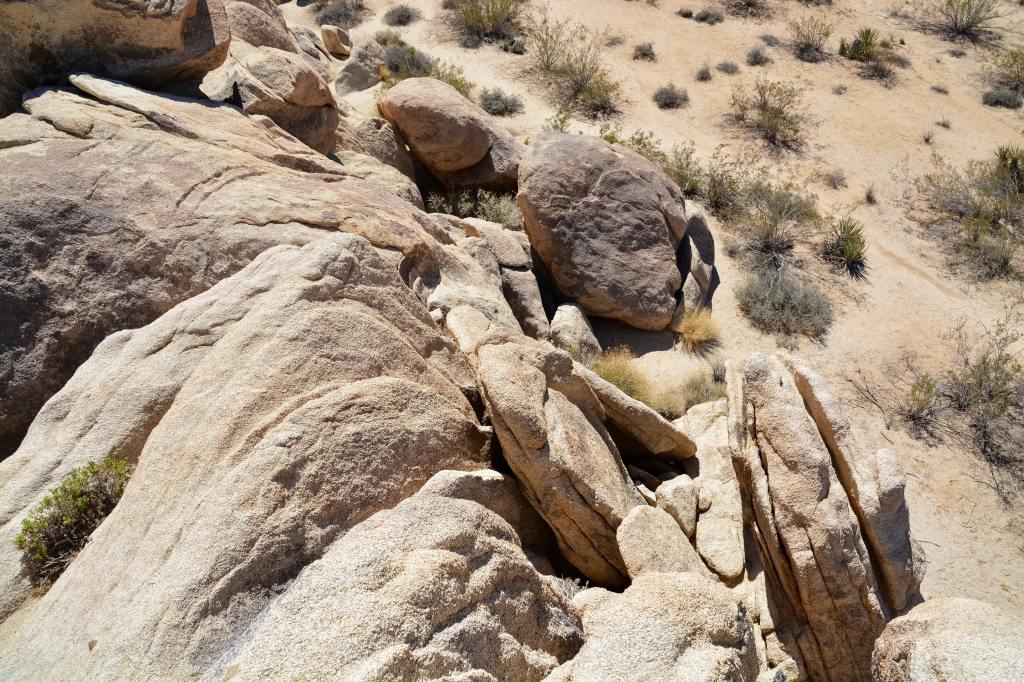
Facts can help us construct ideas about how to solve problems in design too. When I have a client that wants a powerful and exciting logo for their sportswear brand, I can use some facts to construct powerful insights into what logo may work best for them – provided I’ve asked many open ended questions and taken a sincere interest in the client’s project. Knowing that the color red can be eye catching, dramatic, and powerful, I would consider this a major color choice. If the client said their primary customer is a rock climber, I may also consider shapes that resemble famous rocks that climbers are familiar with. But I also know that a good logo is quickly recognizable, so I wouldn’t create a detailed drawing of rocks or a mountain, only simple trapezoids that narrow at the top, but maybe have an angle to indicate a natural form. This may suddenly change when the client mentions they sell almost exclusively to climbers in a region of Arizona where the rocks or more like layered stacks of oval like boulders. These climbers would assume that this logo was for a company that serves climbers near mountains, perhaps in the Colorado Rocky Mountains.
Photo: Jeremy Bezanger, courtesy of Unsplash.
Insights are like a puzzle, the pieces of which are made up of information – the most important of which are usually facts because we know they are true. Some other aspects of insights are emotion based pieces of information which can be a fact in context. An example would be “The client thinks green is the best color for their climbing sportswear brand”. This is a fact because it’s true that the client thinks this if they said they do, but now insights step in, and we point out to the client that their customers are in Arizona and climb boulders in the desert, so their are few green objects, so maybe red or dark orange would be better?
Photo by Yasir Eryilmaz, courtesy of Unsplash.
Combining facts to gain insights is a powerful problem solving tool for most occasions. How do you gain insights into your customer’s needs?
I recently posted a poll on social media to find out what my followers thought about various food choices. While I did get responses, the responses were short and often only one word. That’s fine for a fun poll of social media acquaintances but not for in-depth research. My discovery is that to find out the right answers, I have to ask open ended questions that are specific, but avoid leading and allow room for the respondent to share in greater detail.
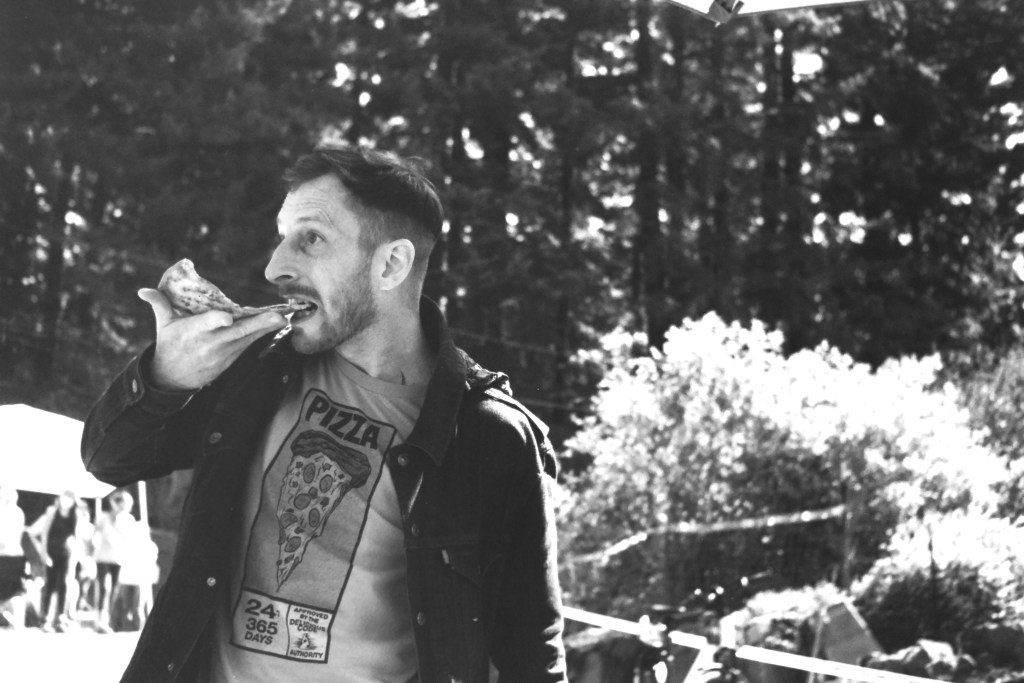
For example I asked “does peanut-butter count as a meal or is it only an ingredient?” Of the four responses, I got only 1 that was more than 2 words. So let’s look at another way I could have asked the question. “What are some ways you like to eat peanut butter?” This question is much more open ended. Or “What are your favorite ways to eat peanut-butter?” could also work. My answers are: In a spoon, on bread with jelly, or in noodles with chili, fish sauce, garlic, chicken and broccoli! Another question I asked was “Is pizza the true Breakfast of Champions (sorry Wheaties)?” While the question is a joke and could evoke many different responses, the structure of the question will likely only get a yes, no, or “who eats pizza for breakfast?!” response.
Let’s try to rephrase a few questions in a way that will lead to more open ended answers…
Have you ever sent a text message while driving? What are some of the silliest text messages you’ve sent while driving? or How do you feel about texting while driving?
Would you say you travel abroad frequently? If you could travel anywhere right now, what are some places you’d want to visit? or Where are your favorite places to visit?
Do you post a lot of pictures on Instagram? What kind of pictures do you post on Instagram? or How do you use Instagram?
Do you prefer to shop at big boxes or locally owned stores? What kind of stores do you like to shop at? or How do your prefer to shop? Do you have an iPhone or an Android phone? Why do you think some people use Android phones and other use Iphones? or Why did you choose your type of phone versus the other type of cell phone (android vs iphone)? How often do you eat sweets? What kind of desserts do you like? or When do you usually eat sweets? Do you tend to buy things that are on sale? How do you shop for good deals? or Where do you look for the best stuff on sale?
Some pizza for thought…er um food for thought… Thanks for reading. I hope you now have more questions than answers. Asking the right questions can lead to more open communication and a better understanding in our personal & professional relationships.
Looking forward to 2021 and wrapping up a great second term at #WSU and had a great experience building work for my 2021 Portfolio in #Com210. We did some fun and challenging projects, I got excellent feedback from my classmates and instructor, and I’m ready to show off the work. Please let me know your constructive feedback/thoughts on the Portfolio or individual pieces.
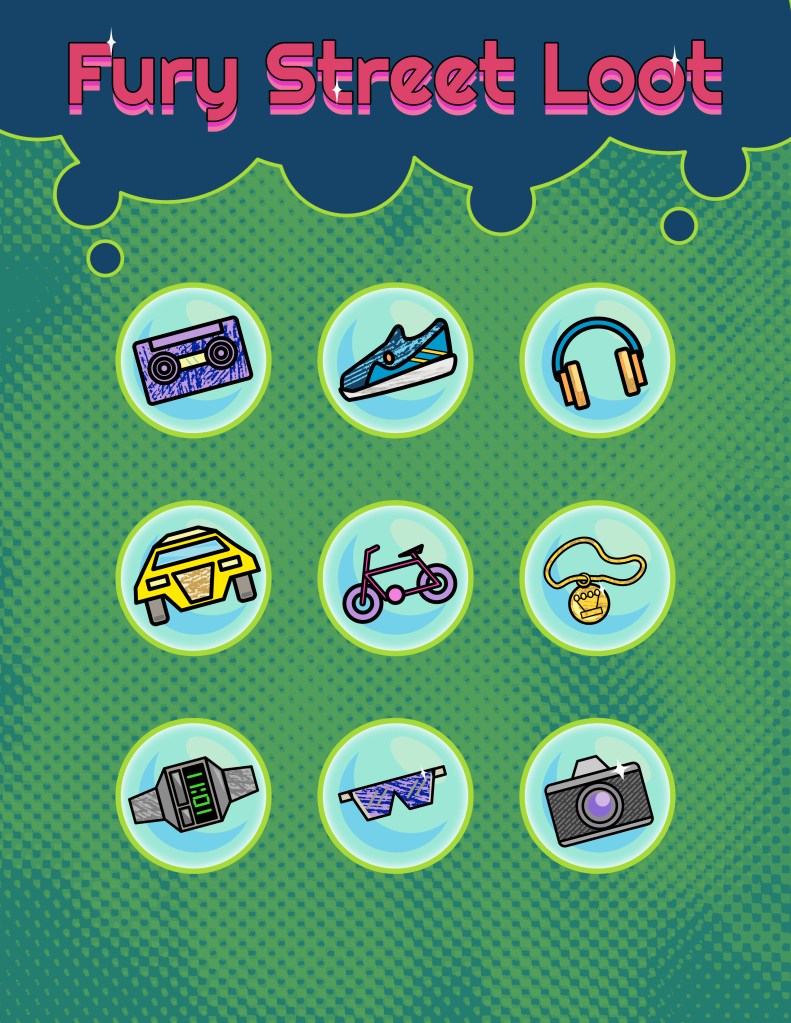
Based on 1980’s street brawler video games and pop culture, these flat icons are designed to signify trophies from gaming dues paid. The series is designed to be modular for future addtions. The colors have a retro feel that is fun and exciting. No cheat codes were used in designing these icons!
This project was challenging because I had to make objects that in reality are very different in scale, but for the sake of Icons have to be about the same size with similar stroke width and detail.
What started with a boring landscape photo became this story about how humanity looks to spaceships and distant stars for hope yet we are riding on the best designed spaceship possible. This digital collage includes several photos and inspiration from 1980’s style movie posters. The lighting adjustments, type treatments, and masking was a welcome challenge.
This piece taught me about audience awareness and the value of critiques. The first draft received several interpretations and I received excellent feedback that inspired deeper work with the exposure adjustments, masking, and effects.





 Daniel Rider